15 Sep 2026
Regulatory Frameworks and Statistical Benchmarks Shaping Equine Competition Forecasting
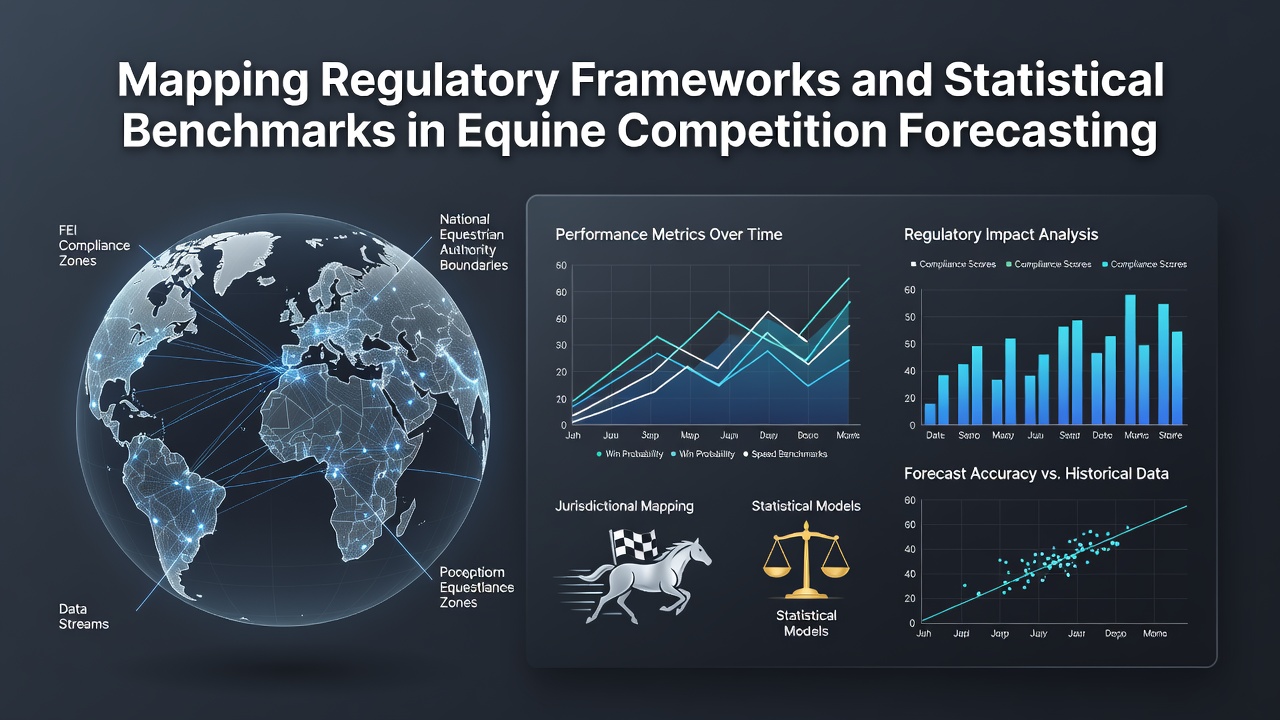
Regulatory frameworks in equine competition forecasting establish the boundaries within which statistical models operate, and these structures vary across jurisdictions while sharing common threads around data transparency, animal welfare standards, and fair competition protocols. Observers note that agencies in different regions coordinate on baseline requirements for performance data collection, which in turn influences how forecasters calibrate their algorithms. Data from international racing bodies shows consistent emphasis on verifiable inputs such as veterinary records, track surface measurements, and historical race outcomes, because these elements feed directly into predictive accuracy.
Key Regulatory Structures Across Regions
North American oversight relies on bodies like The Jockey Club, which enforces standardized reporting for equine health metrics and race timing systems, whereas Australian authorities through Racing Australia implement similar rules focused on integrity and statistical consistency in performance records. European frameworks, coordinated via national federations under broader EU animal welfare directives, require detailed logging of training and competition data that forecasters must incorporate when building regional models. Researchers have observed that these rules create interoperability challenges, since formats for speed ratings and injury histories differ, yet alignment efforts continue to reduce discrepancies in cross-border forecasting exercises.
September 2026 marks the scheduled rollout of updated data-sharing mandates in several Australian states, where regulators will require real-time submission of biometric sensor outputs from competing horses. This change builds on existing statistical benchmarks that already track stride length, heart rate recovery, and post-race blood profiles. Those who analyze global patterns find that such mandates push forecasting systems toward greater use of standardized APIs, allowing models to ingest fresh variables without extensive reformatting.
Statistical Benchmarks in Practice
Performance metrics serve as the quantitative backbone for equine competition forecasting, and common benchmarks include adjusted speed figures, class ratings, and pace projections derived from thousands of prior races. Studies from veterinary research institutions indicate that incorporating environmental variables like temperature and humidity alongside these core figures improves model reliability, particularly when forecasts span multiple seasons. Analysts often combine these benchmarks with regulatory-mandated welfare indicators, such as mandatory rest periods between starts, because violations of rest rules can skew projected outcomes.
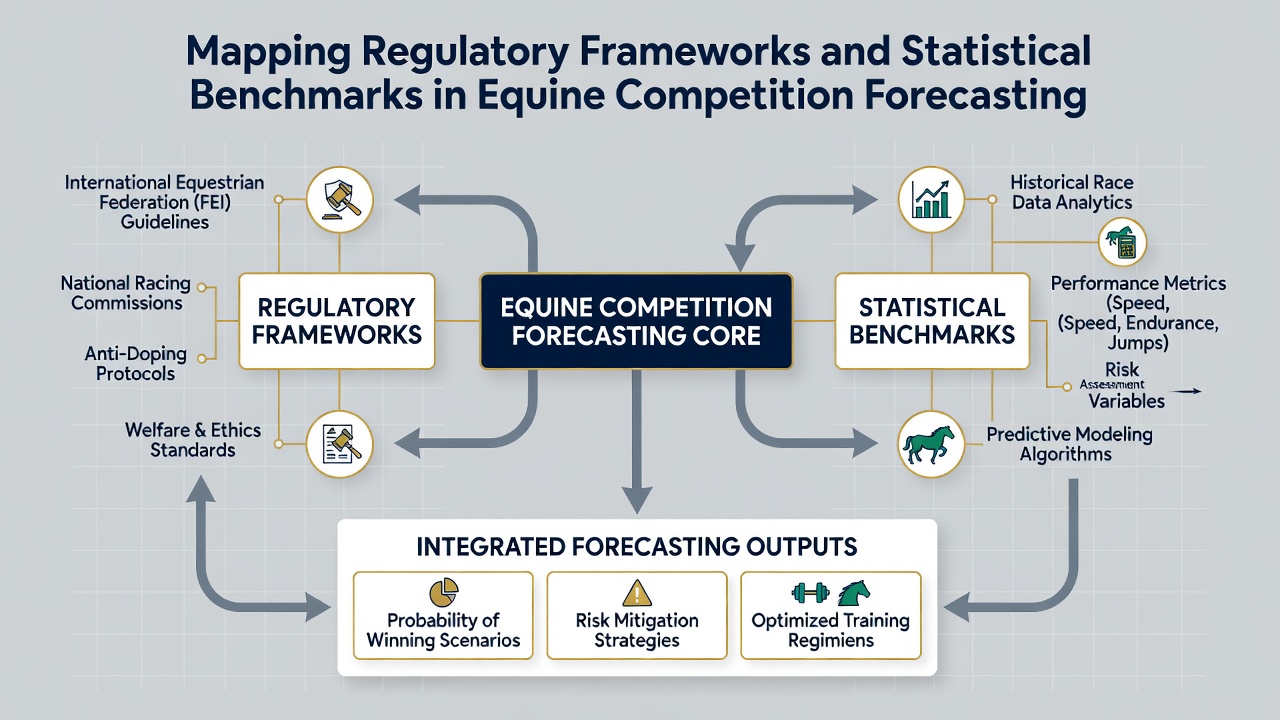
One study revealed that models relying solely on raw finishing times without regulatory context produced higher error rates during periods of rule changes, whereas integrated approaches that factored in updated medication policies showed measurable gains in precision. Canadian racing commissions contribute additional benchmarks through mandatory reporting of workout data, creating longitudinal datasets that forecasters use to detect form cycles. The reality is that these benchmarks evolve as regulators introduce new measurement technologies, requiring ongoing recalibration of forecasting tools.
Integration Challenges and Solutions
Mapping regulatory frameworks onto statistical benchmarks demands careful attention to jurisdictional differences in data granularity and update frequency. Forecasters working with international datasets frequently encounter mismatches in how track variants are calculated, which forces adjustments before benchmarks can be compared directly. Academic papers from equine science programs highlight successful case studies where unified ontologies allowed models to blend US speed figures with European sectional timing data, resulting in more robust multi-region forecasts.
Industry organizations such as the International Federation of Horseracing Authorities maintain directories of approved statistical standards that help practitioners navigate these variations. Racing Australia publishes periodic updates on benchmark revisions tied to surface condition monitoring, while Cornell University's Equine Research Program supplies peer-reviewed findings on physiological indicators that regulators increasingly reference when setting new thresholds. Practitioners who align their models with these sources report smoother adaptation when rules shift.
Future Developments in Data Governance
Emerging sensor technologies and blockchain-based record systems are prompting regulators to revisit how statistical benchmarks are validated and shared. Pilot programs in several jurisdictions test automated verification of performance data against regulatory criteria, reducing manual review burdens while maintaining audit trails. Those tracking these pilots note that successful implementations depend on clear definitions of benchmark thresholds that remain consistent even as measurement precision increases.
Equine competition forecasting therefore sits at teh intersection of evolving oversight and quantitative refinement, where each new regulatory layer adds constraints and opportunities for statistical improvement. Continued collaboration among regional authorities supports the gradual harmonization of benchmarks, which in turn strengthens the reliability of forecasts built upon them.
Conclusion
Regulatory frameworks and statistical benchmarks together form the operational foundation for equine competition forecasting, and their ongoing alignment determines how effectively models translate raw data into actionable projections. As new requirements take effect in 2026 and sensor technologies mature, the mapping process will require sustained attention from both regulators and analysts to preserve accuracy across diverse competitive environments.