28 Oct 2026
Seasonal Shifts in Equine Response Patterns Across Varied Global Circuits
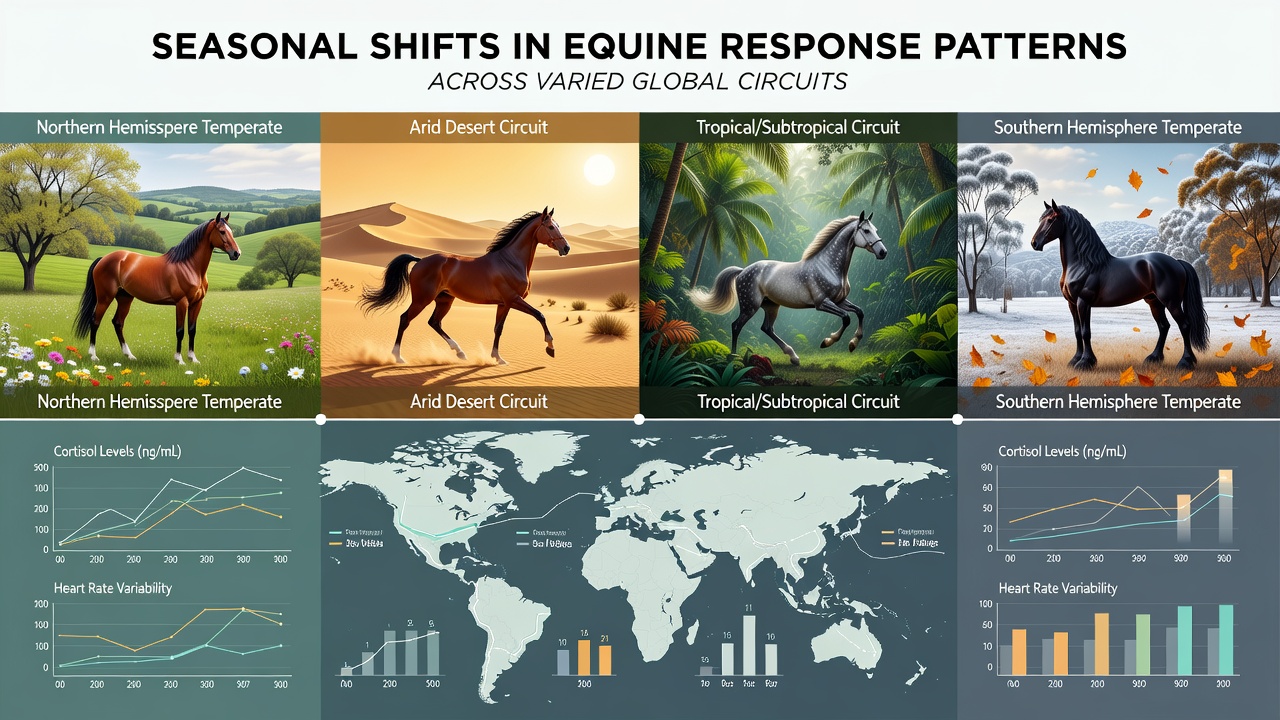
Researchers have documented clear seasonal shifts in equine response patterns that appear across racing circuits from North America to Australia and Europe, with data showing how daylight hours, temperature swings, and track moisture levels alter recovery times, stride efficiency, and overall output. Studies compiled over multiple years indicate that horses in the northern hemisphere often display slower post-exercise heart rate returns during winter months, whereas those competing in southern circuits experience peak responses during their summer racing peaks.
Northern Hemisphere Patterns and Regional Data
Observers tracking events in the United States and Canada note that autumn transitions bring measurable changes in muscle enzyme levels, particularly when horses move from turf to synthetic surfaces after early frosts arrive. The Jockey Club has recorded performance metrics showing average race times extending by fractions of a second in late October and November, coinciding with reduced daylight that affects melatonin cycles and rest patterns. In contrast, European circuits report similar adjustments during spring thaws, when increased rainfall softens ground and prompts trainers to adjust conditioning routines that influence oxygen uptake rates.
One study from Canadian veterinary researchers highlighted how horses traveling between circuits in Ontario and Kentucky exhibit adaptation lags of up to three weeks when crossing seasonal zones, with blood lactate thresholds shifting under cooler, shorter days. These findings align with observations from trainers who monitor respiratory rates during morning works, revealing that colder air increases breathing effort and alters energy distribution across muscle groups.
Southern Hemisphere Variations and Cross-Continental Comparisons
Australia's racing calendar provides a direct counterpoint, where summer heat in December and January drives elevated core temperatures that researchers link to quicker fatigue onset in longer-distance events. Racing Australia data reveals that horses conditioned in milder spring periods often post stronger finishing splits when campaigns extend into the warmer months, provided hydration protocols account for humidity spikes common in coastal venues. Observers note parallel effects in South African circuits, where seasonal rainfall patterns reshape track firmness and prompt corresponding changes in hoof angle responses during turns.
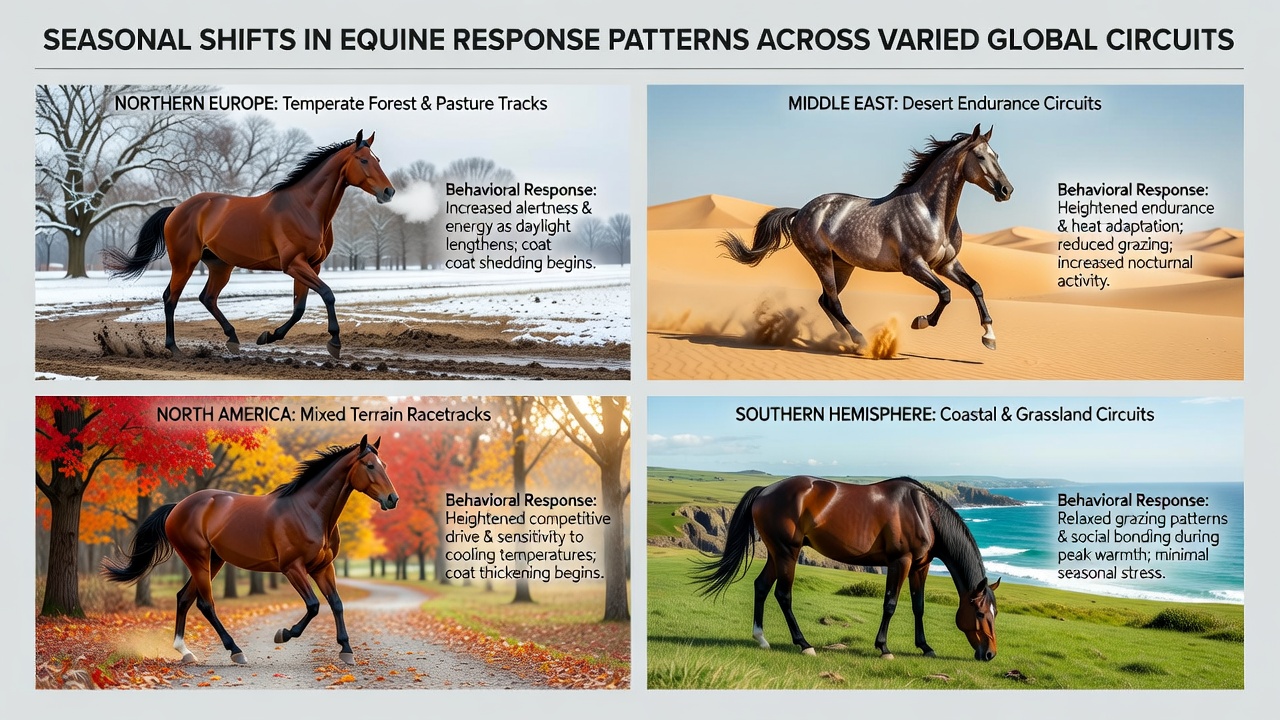
What's notable is how international shippers experience compounded effects when moving between hemispheres. Data collected during 2025-2026 campaigns shows that horses arriving in Australia from European bases in October require targeted acclimation periods to recalibrate their circadian rhythms, with heart rate variability metrics stabilizing only after exposure to reversed daylight patterns. Similar transitions occur for horses heading north, where the move from southern summer to northern autumn demands adjustments in feed composition to maintain glycogen stores.
Physiological Indicators and Measurement Approaches
Equipment such as wearable sensors now captures stride length variations tied directly to seasonal humidity and barometric pressure shifts, allowing analysts to correlate these readings with finishing positions across circuits. In October 2026, ongoing monitoring programs continue to track how increased wind exposure during transitional months affects balance and cornering stability, particularly on exposed tracks in the American Midwest and British Isles. University-led projects in both Australia and the United States have quantified these responses through repeated treadmill tests under simulated seasonal conditions, confirming that recovery intervals lengthen when ambient temperatures drop below certain thresholds.
Trainers across circuits apply these insights by modifying warm-up durations and incorporating indoor schooling during extreme weather phases. Figures from industry reports indicate that circuits implementing such adjustments see more consistent performance clusters, reducing the scatter in sectional timing data that previously accompanied abrupt seasonal changes.
Conclusion
Global racing circuits continue to demonstrate interconnected seasonal influences on equine responses, with measurable physiological and behavioral adjustments appearing consistently in performance records. Data from regulatory bodies and research institutions across regions supports ongoing refinement of conditioning and travel protocols that account for these shifts, ensuring that response patterns remain predictable even as horses navigate varied environmental demands throughout the year.